
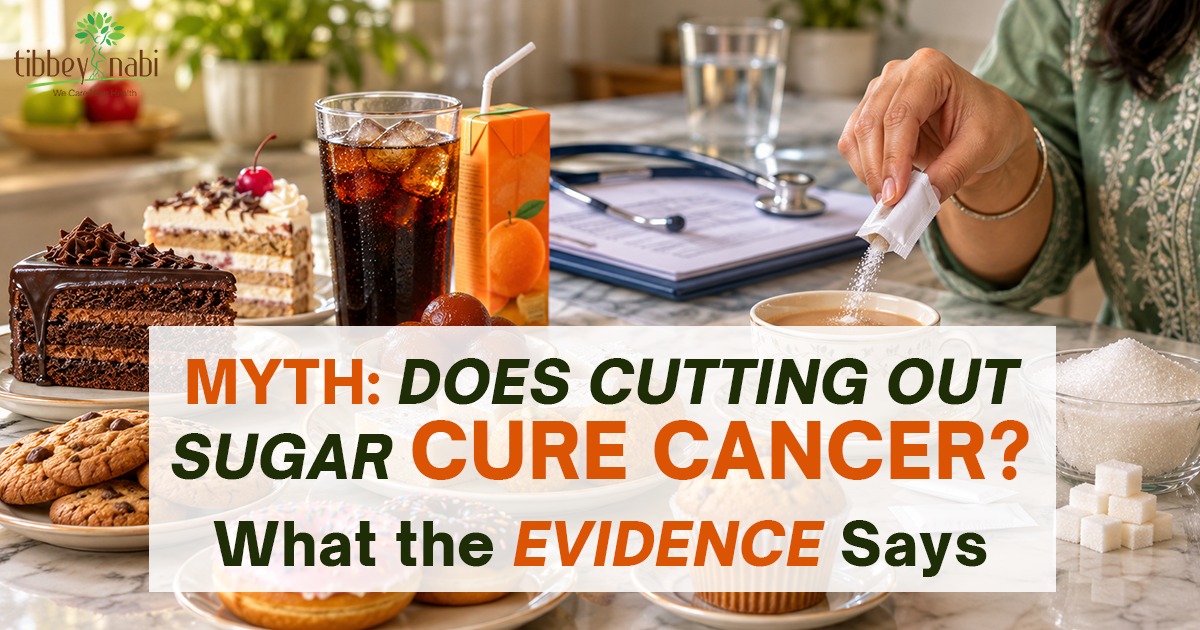
There is no good evidence that cutting out sugar cures cancer or “starves” a tumour, because every cell in the body, healthy or cancerous, uses glucose. What the evidence does support is a balanced approach: a varied diet with less added sugar, a healthy weight, regular movement, no tobacco, regular check-ups, and supportive care that fits your treatment. Cutting back on sugary drinks and sweets is good for your health. Extreme restriction during treatment can do more harm than good, so the goal is balance, not perfection.
A Balanced Approach: What Each Part Does
| Part of the plan | What it contributes |
| Balanced nutrition | Energy, protein and vitamins to help you get through treatment. Less added sugar, more whole foods. |
| Movement and rest | Light daily activity and good sleep help with fatigue and mood. |
| Medical care | Your oncologist’s treatment plan and follow-up come first, and everything else is built around it. |
| Supportive care: Body Revival | An Ayurvedic supportive-care supplement taken alongside your treatment, with your oncologist’s knowledge. |
| Tobacco-free life | Avoiding cigarettes, shisha and medwakh is one of the strongest steps for lowering cancer risk. |
Why The Sugar Myth Is So Popular
The myth has a kernel of truth. Many tumours take up glucose at a higher rate than normal tissue, which is exactly how PET scans work: a labelled form of glucose is injected and shows up where cells are most active. The World Cancer Research Fund notes that scientists are still unsure why cancer cells behave this way. From there it is a short step to “cut the sugar and the tumour will starve”. But glucose also fuels your brain, muscles and immune cells, and your body makes glucose from protein and fat even if you eat none. Removing sugar from the plate does not remove it from the blood.
Does Sugar Feed Cancer?
In the narrow sense that cancer cells use glucose, yes, as every cell does. The American Institute for Cancer Research notes that every cell in the body, including cancer cells, uses glucose from the bloodstream, and that there is no clear evidence dietary sugar specifically feeds tumours more than other food. Cancer Research UK calls “sugar feeds cancer, so cut it out” an oversimplification, because cancer cells also need amino acids and fats.
Researchers are also looking at insulin resistance as a possible link with higher risk for certain cancers. That is one more reason to keep a healthy weight and stay active, but it is not a reason to remove every sugar from your diet.
Should I Stop Sugar Completely?
For most people, no. For people in treatment, usually not, and not without talking to your team.
- Added sugar is worth limiting. The WHO recommends keeping free sugars (sugar added to food and drinks, plus sugar in honey, syrups and juices) below 10% of daily energy, about 50 g or 12 level teaspoons for an adult eating around 2,000 calories, and says 5% or less may add benefit. The Emirates Oncology Society’s president has said, that limiting sugar and refined carbohydrates is reasonable as part of a healthy lifestyle, but that cutting out sugar and protein to “kill” cancer cells is a myth.
- Whole foods are different. Sugar inside whole fruit, vegetables, dairy and grains comes with fibre, vitamins and protein.
- Restriction can backfire during treatment. Treatment often reduces appetite, and weight loss is linked to poorer outcomes. If you are losing weight, eating enough comes first.
- Diabetes and steroids. If you have diabetes, or take steroid medicines that raise blood sugar, you need individual advice from your doctor or dietitian.
Where Sugar And Cancer Risk Do Connect
The more reliable link is indirect. Cancer Research UK says excess weight raises the risk of at least 13 types of cancer. The American Institute for Cancer Research lists 12 cancers convincingly linked to excess body fat, including postmenopausal breast, colorectal, endometrial, liver, kidney, pancreatic and stomach cancers. Sugary drinks are one of the easiest places to cut, since they add many calories without making you feel full: fizzy drinks, energy drinks, sweetened coffee, heavily sweetened karak and bottled juices.
What This Means In The UAE
- The numbers: GLOBOCAN’s 2024 estimates for the UAE list about 8,815 new cancer cases and 3,814 deaths a year in a population of around 11 million. Breast cancer is the most common (1,774 cases, 20.1%), followed by colorectal (1,005), thyroid (682), prostate (595) and lung (449). These are modelled estimates.
- Younger patients: A 2021 report in The National on a study led by Dr Humaid Al Shamsi found that 45.4% of cancer diagnoses (2017 registry data) were in people aged 20 to 49, against roughly 8% to 9% in the UK and US. Experts quoted pointed to diet, inactivity and obesity, environmental and hereditary factors, more screening, and the UAE’s young population.
- Tobacco: A University of Sharjah study, reported in The National, found nickel, chromium, copper and zinc at higher levels in tested medwakh and shisha products than in cigarette tobacco, and that bubbling smoke through water removed only about 3% of the metals.
- Cancer care overall: Source: The State of Cancer Care in the United Arab Emirates in 2022.
Taken together: the proven steps for lowering risk are not smoking, keeping a healthy weight, staying active, eating mostly whole foods and attending screenings.
Are Sugar Substitutes Safe?
For most people, in normal amounts, yes.
- Human studies: Cancer Research UK states that the best studies of people do not show a link between artificial sweeteners and cancer.
- Aspartame: In July 2023 IARC classed aspartame as Group 2B, “possibly carcinogenic to humans”, on limited evidence. At the same time the joint FAO/WHO expert committee (JECFA) kept the acceptable daily intake at 40 mg per kg of body weight and found the human evidence “not convincing” (WHO summary). For a 70 kg adult that is more than 9 to 14 cans of diet drink a day.
- Practical view: Water, unsweetened tea and plain milk are the best first choices. Sweeteners can help you move away from sugary drinks.
- During treatment: Sugar alcohols such as sorbitol or xylitol can cause bloating or diarrhoea.
- Supplements and sweeteners:
What Does A Balanced Diet Look Like?
| Part of the plate | Examples for UAE and Indian kitchens | Notes |
| Vegetables and fruit (at least 400 g a day, per WHO) | Salads, cooked vegetables, dal with vegetables, berries, apples, oranges, papaya, a few dates | Wash and peel well; during chemo, follow your team’s advice on raw produce |
| Protein | Fish, chicken, eggs, lentils, chickpeas, dal, paneer, yoghurt, labneh | Cancer patients often need more protein than usual |
| Whole grains | Brown or red rice, whole-wheat roti, oats, dalia, ragi | Choose over refined white bread and sweet pastries |
| Healthy fats | Olive oil, roasted nuts, seeds, a little ghee | In moderation |
| Drinks | Water, unsweetened tea, buttermilk, soups | Limit sugary soft drinks, energy drinks and sweetened juices |
| Treats | Kunafa, luqaimat, ice cream, mithai | Fine now and then |
| Supportive care | Body Revival, taken as directed alongside meals | Share the ingredient list with your oncologist |
If treatment makes eating hard, calories and protein come first, and a milkshake, lassi or soft sweet food you can actually eat is better than skipping a meal. See our for a week-by-week Indian meal plan.
A Note for Ramadan
The Emirates Oncology Society’s 2025 guidance, reported by Gulf News, advises a balanced diet rich in protein, vegetables and fish, 1.5 to 2 litres of fluids between Iftar and Suhoor, and limiting sugar and refined carbohydrates. Whether to fast is a medical decision, and patients on IV chemotherapy are exempt on treatment days. Sweet iftar foods are traditional, so the practical step is smaller portions, paired with protein.
Body Revival: Ayurvedic Supportive Care Alongside a Balanced Diet
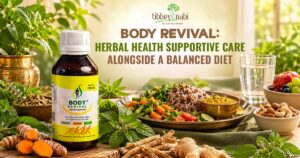
Body Revival is an herbal health supplement made for people who want supportive care during their cancer journey. It is designed to be taken alongside a balanced diet and your doctor’s treatment plan, as one part of a whole-person approach.
The research behind it: Body Revival is the subject of a breast cancer study registered with the Clinical Trials Registry of India (CTRI/2023/11/059465).
What is in it:
How to use it well:
- Share the ingredient list with your oncologist and take it as directed.
- Keep your meals, fluids and protein steady. Supportive care works best on top of good nutrition.
- Tell your doctor about any changes you notice, good or bad.
- Keep up your scheduled treatments and check-ups.
In the UAE: Food supplements are registered through MOHAP and Dubai Municipality, and the process includes classification and a review of label claims, according to regulatory consultancy Freyr.
For more on adding supplements to your routine, read our guide to herbal supplements during chemotherapy.
When To Talk To Your Doctor Or Dietitian
- You are losing weight without trying, or cannot eat enough.
- You have diabetes, or high blood sugar from steroids or other medicines.
- You are thinking of a keto, fasting or other special diet.
- You want to add a supplement or herbal product to your routine.
- You have nausea, mouth sores or taste changes that make eating difficult.
Caregivers can find a full checklist in our guide to caring for a cancer patient at home. In the UAE, call 998 for an ambulance in an emergency.
Frequently Asked Questions
1. Does sugar feed cancer?
Cancer cells use glucose, but so does every cell in your body, and no strong evidence shows that eating sugar makes cancer grow faster than other food would. The better-established link is indirect: too much sugar and too many calories can lead to excess weight, which raises the risk of several cancers.
2. Does cutting out sugar cure cancer?
No. There is no evidence that a sugar-free diet cures cancer, shrinks a tumour or improves survival.
3. Should I stop sugar completely during chemotherapy?
Usually not. Eating enough calories and protein matters more during treatment. Limiting sweets and sugary drinks is reasonable, but do not cut out whole food groups or fruit without your team’s advice.
4. Do I need to avoid fruit and dates?
Generally no. Whole fruit gives fiber, vitamins and energy. Portions can matter if you have diabetes, so ask your doctor or dietitian.
5. Is honey, jaggery or brown sugar better than white sugar?
Not in a way that changes cancer risk. The WHO counts honey and syrups as free sugars. Raw honey is also best avoided when blood counts are low.
6. How much added sugar is too much?
The WHO recommends below 10% of daily energy from free sugars (about 50 g for a 2,000-calorie diet), and below 5% for extra benefit. One can of soft drink or energy drink can use up much of that.
7. Are artificial sweeteners safe?
In normal amounts, current evidence says they are unlikely to cause cancer. The best human studies show no link, and water is still the best first choice.
8. Is aspartame cancer-causing?
IARC classed aspartame as “possibly carcinogenic” in 2023 on limited evidence, while JECFA kept the acceptable daily intake at 40 mg per kg of body weight. A 70 kg adult would need more than 9 to 14 cans of diet drink a day to exceed it.
9. Does a keto or fasting diet starve cancer?
Evidence is inconclusive, and weight loss is a concern. Speak to your oncology team before trying one during treatment.
10. If PET scans use sugar, doesn’t that prove sugar feeds cancer?
PET scans show that many tumours take up glucose actively, which makes them visible. That does not mean eating less sugar starves the tumour.
11. What does a balanced diet look like for a cancer patient?
Vegetables and fruit, enough protein, whole grains, healthy fats and plenty of fluids, with sugary drinks and heavily processed foods kept to a minimum. During treatment, eat small amounts often and prioritise calories and protein if appetite is low.
12. Does smoking shisha matter more than eating sugar?
For cancer risk, tobacco is far more important. A University of Sharjah study found shisha and medwakh smoke carried metals such as nickel at levels higher than cigarette tobacco, and water filtration removed only about 3%.
13. What is Body Revival and how does it fit into a balanced plan?
Body Revival is an Ayurvedic herbal supplement for supportive care during cancer treatment. It is taken alongside a balanced diet, movement and your medical care, as one part of an overall approach.
14. Can I take Body Revival while following a healthy diet?
Yes, many people take it alongside meals. Share the ingredient list with your oncologist, follow the directions on the label, and keep up your balanced diet and fluids.
15. Is there research on Body Revival?
A breast cancer study of Body Revival is registered with the Clinical Trials Registry of India (CTRI/2023/11/059465).
Final takeaway
Sugar does not cure or cause cancer on its own, and cutting it out will not starve a tumour. What helps is balance: not smoking, a healthy weight, regular movement, mostly whole foods, screenings on time, and eating enough during treatment. Limit sugary drinks and sweets because they are good for your health, and add supportive care such as Body Revival to your routine, with your oncologist’s knowledge. Choose habits you can keep.
Disclaimer
This article is for general information only and is not medical advice. Please follow the advice of your oncologist and a registered dietitian, especially if you have diabetes, are losing weight or are in treatment. Body Revival is an Ayurvedic supportive-care supplement intended to be used alongside, not in place of, the treatment your doctor advises. The CTRI number identifies a registered study and does not indicate approval.
References
- GLOBOCAN 2024: United Arab Emirates fact sheet (IARC / Global Cancer Observatory)
- Gulf News: Ramadan 2025: UAE Oncology Society sets guidelines for cancer patients fasting
- Freyr Solutions: Food supplement registration in the UAE (MOHAP and Dubai Municipality)
- The National: Shisha contains high levels of cancer-causing metals, UAE study finds (2018)
- The National: UAE cancer rate five times higher in young adults than in UK and US (2021)
- The State of Cancer Care in the United Arab Emirates in 2022 (PMC)
- Cancer Research UK: Sugar and cancer: what you need to know; Do artificial sweeteners cause cancer?
- American Institute for Cancer Research: Does sugar feed tumors?; The sugar-cancer connection
- World Cancer Research Fund: Ask the expert: does sugar feed cancer?
- WHO: Healthy diet fact sheet; Aspartame hazard and risk assessment results released (July 2023)
- Clinical Trials Registry of India: CTRI/2023/11/059465 (search the registry by this number)
- Tibbey Nabi: How to care for a cancer patient: caregiver guide (UAE); Herbal supplements during chemotherapy