
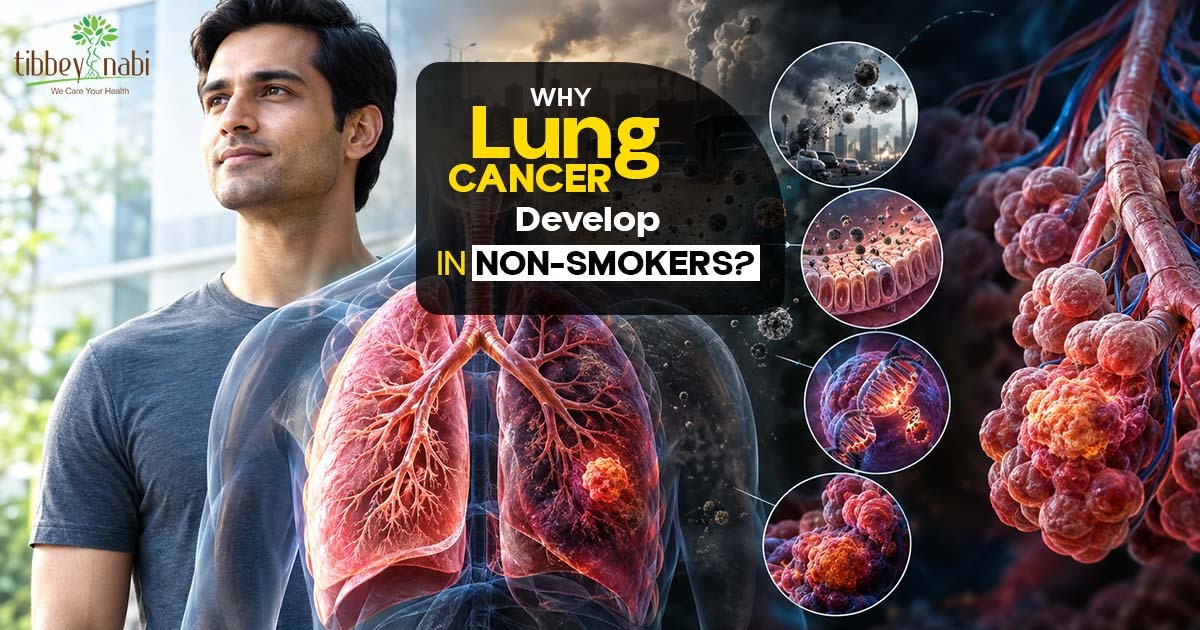
Lung cancer is often associated with cigarette smoking. But smoking is not the only factor associated with lung cancer, and people who have never smoked can also develop the disease.
This is an important part of the conversation in the UAE, other Gulf countries and Pakistan, where people may encounter a combination of environmental, occupational and household exposures. Research from different populations has also identified factors such as secondhand tobacco smoke, air pollution, occupational carcinogens, family history and certain biological or genetic characteristics among people who develop lung cancer without a history of smoking.
According to the International Agency for Research on Cancer (IARC), tobacco smoking remains the principal risk factor for lung cancer globally. However, IARC also identifies secondhand tobacco smoke, outdoor and indoor air pollution, diesel engine exhaust, welding fumes and asbestos among other important exposures.
For people living in the UAE, Gulf countries and Pakistan, understanding these factors can help create greater awareness about lung health—even for people who have never smoked.
Can Someone Who Never Smoked Develop Lung Cancer?
Yes. “Never-smoker” does not mean “zero risk.” Medical research has consistently documented lung cancer among people who have never smoked.
A large systematic review of never-smoker lung cancer found associations with factors including environmental tobacco smoke, family history and certain previous respiratory conditions. More recent research has also found associations between never-smoker lung cancer and exposure to particulate air pollution such as PM2.5.
Importantly, researchers do not believe there is one single explanation for lung cancer in never-smokers. Different environmental exposures, inherited susceptibility and biological changes can contribute to different individuals.
That is why the absence of a smoking history should not automatically rule out the possibility of lung disease.
Why Is This Relevant to the UAE and Gulf Countries?
The Gulf region has experienced substantial urbanization, industrial development and population growth. Air quality can be influenced by several factors, including road traffic, industrial activity, energy production and particulate matter.
Research examining air quality in Gulf Cooperation Council countries has identified multiple sources of air pollution, although the precise contribution of individual exposures to lung cancer risk in each Gulf country requires further region-specific research.
Therefore, it is more accurate to say that air pollution is an important health consideration in the region, rather than claiming that a particular Gulf environmental exposure directly causes a specific number of lung cancer cases.
The broader scientific evidence does support an association between fine particulate air pollution and lung cancer, including among never-smokers.
Secondhand Smoke Can Matter Even If You Do Not Smoke
One of the clearest explanations for lung cancer among some non-smokers is exposure to tobacco smoke from other people.
Secondhand smoke contains numerous toxic and cancer-causing substances. A person who does not smoke can still inhale these substances in homes, workplaces, vehicles or other environments where tobacco is used.
This makes tobacco exposure a relevant consideration for families and communities—not only for people who personally smoke.
IARC identifies secondhand tobacco smoke as an established risk factor for lung cancer.
Occupational Exposure: An Important Regional Consideration
Workplace exposure is another area that deserves attention.
Certain occupations can involve exposure to substances associated with lung cancer, including:
- Asbestos
- Diesel engine exhaust
- Welding fumes
- Certain industrial chemicals
- Silica and other workplace dusts
This can be particularly relevant in countries with substantial construction, manufacturing, transportation, industrial and energy-related workforces.
Research examining occupational exposures in the UAE has estimated a measurable burden of disease associated with occupational carcinogens and particulate matter, with lung cancer among the diseases associated with the occupational risk factors studied.
This does not mean that working in construction, industry or another occupation automatically causes lung cancer. Risk depends on the specific substance, intensity and duration of exposure, workplace controls and individual factors.
What About Pakistan?
Pakistan has its own set of environmental and occupational considerations.
A case-control study involving participants from different regions of Pakistan found associations between lung cancer and several exposures, including pesticide exposure, diesel exhaust, welding fumes, wood dust and asbestos, in addition to smoking.
These findings are useful for understanding potential risk patterns, but they should not be interpreted as proof that every individual exposed to these factors will develop lung cancer.
For Pakistan, as elsewhere, lung cancer risk is better understood as the result of multiple interacting factors rather than one universal cause.
Indoor Air and Cooking-Related Exposure
Outdoor pollution is not the only environmental consideration.
Research on lung cancer in never-smokers has identified household fuel smoke and cooking-related fumes as areas of interest. Studies have particularly examined exposure to smoke and fumes generated during cooking or heating, especially where ventilation is limited.
This does not mean that normal cooking is a cause of lung cancer. The concern relates to long-term exposure to significant levels of combustion-related smoke or fumes, particularly in poorly ventilated environments.
Improving ventilation and reducing unnecessary exposure to smoke and combustion products are sensible steps for maintaining better indoor air quality.
Genetics Can Also Play a Role
One of the most interesting aspects of lung cancer in never-smokers is that the disease can have a different biological profile from smoking-associated lung cancer.
Research has identified specific molecular alterations that occur more frequently in some never-smoker lung cancers. EGFR mutations and ALK rearrangements, for example, have been reported more frequently in never-smokers than in smoking-associated lung cancer.
This is important because lung cancer is not a single disease with a single biological pathway.
Modern cancer diagnosis can therefore involve examining the characteristics of the tumour itself, including relevant molecular alterations, when appropriate.
Why Are Women Often Mentioned in Discussions About Never-Smoker Lung Cancer?
Never-smoker lung cancer has been observed disproportionately among women in many populations.
A recent systematic review and meta-analysis involving millions of never-smokers found an association between female sex and never-smoker lung cancer, along with associations involving passive smoking and particulate air pollution.
Several factors may contribute, including differences in environmental exposure, biological susceptibility and genetics. However, there is no single explanation that applies to every woman who develops lung cancer without smoking.
The important message is simple: lung-health awareness should not be limited to smokers.
Symptoms Should Not Be Ignored Because Someone Does Not Smoke
One challenge with lung cancer in never-smokers is that symptoms can sometimes be attributed to less serious respiratory conditions.
Possible symptoms can include:
- A persistent or worsening cough
- Shortness of breath
- Chest discomfort or pain
- Coughing up blood
- Recurrent respiratory infections
- Unexplained weight loss
- Persistent fatigue
- Changes in breathing
These symptoms can have many causes and do not automatically indicate cancer.
However, persistent or unexplained respiratory symptoms deserve appropriate medical evaluation—particularly when they continue, worsen or occur together.
Recent research highlights that symptoms in never-smokers may be overlooked because they do not fit the traditional perception of someone being at high risk for lung cancer.
Does Never Smoking Mean You Do Not Need to Pay Attention to Lung Health?
Not necessarily.
A person’s overall risk depends on their age, family history, previous health conditions, occupational exposures, environmental exposure and other individual factors.
There is also no universal lung cancer screening recommendation for every never-smoker simply because they live in a particular country.
Instead, people with persistent symptoms or significant individual risk factors should discuss them with a qualified healthcare professional, who can determine whether further evaluation is appropriate.
The Importance of a Broader Approach to Wellness

Lung health is influenced by more than one lifestyle choice.
A balanced approach can include:
- Avoiding tobacco use and unnecessary secondhand smoke exposure
- Following appropriate workplace safety measures
- Maintaining good indoor ventilation
- Reducing avoidable exposure to dust, fumes and combustion products
- Staying physically active according to individual ability
- Maintaining a balanced nutritional pattern
- Seeking medical evaluation for persistent or unexplained symptoms
- Following appropriate medical care when a condition is diagnosed
These are general wellness principles rather than guarantees against cancer.
Herbal Supplements and Supportive Wellness
Interest in herbal supplements has grown among people looking for additional ways to support their overall wellness.
Herbal and botanical formulations contain naturally derived ingredients and may be considered by some individuals as part of a broader wellness routine. However, their role should be understood according to the ingredients, formulation, intended use and available evidence for the specific product.
For someone undergoing cancer evaluation or treatment, immunotherapy herbal supplements should be considered & discussed with the treating healthcare professional. This is particularly important because some herbs and supplements can interact with medicines.
Tibbey Nabi: A Herbal Wellness Perspective
Tibbey Nabi focuses on herbal and natural wellness solutions and reflects the growing interest in plant-based approaches to health and wellbeing.
For individuals interested in herbal supplements during a period of health management, the important considerations are transparency about ingredients, responsible formulation, quality standards and understanding the intended role of the product.
Herbal supplements can be considered within a broader supportive wellness approach in cancer care, while diagnosis and medical treatment decisions should remain guided by qualified healthcare professionals.
The goal is not to position one approach against another. Instead, modern wellness increasingly involves understanding different forms of support and making informed choices based on individual needs.
The Bigger Message for the UAE, Gulf Countries and Pakistan
The conversation around lung cancer is changing.
Smoking remains the leading risk factor worldwide, but lung cancer can also occur in people who have never smoked. Research points toward a combination of factors—including secondhand smoke, air pollution, occupational exposures, household exposures, family history and biological susceptibility.
For people in the UAE, Gulf countries and Pakistan, this makes awareness particularly important.
Being a non-smoker is an important positive health factor, but it should not become a reason to ignore persistent respiratory symptoms or other potential risk factors.
Better awareness, appropriate environmental precautions, timely medical evaluation and a balanced approach to overall wellness can all contribute to more informed lung-health decisions.
Frequently Asked Questions
1. Can lung cancer occur in someone who has never smoked?
Yes. Never-smokers can develop lung cancer. Research has identified several potential contributing factors, including secondhand smoke, air pollution, occupational exposures, family history and genetic or molecular characteristics.
2. Is air pollution linked to lung cancer?
Yes. Outdoor air pollution, particularly fine particulate matter, is recognised as a lung cancer risk factor. Research has also found an association between particulate pollution and lung cancer among never-smokers.
3. Can secondhand smoke affect non-smokers?
Yes. Exposure to tobacco smoke from other people is an established lung cancer risk factor for people who do not smoke themselves.
4. Are women who never smoke at risk of lung cancer?
Yes. Never-smoker lung cancer occurs in women as well as men, and research has found a notable association between female sex and lung cancer among never-smokers.
5. Can workplace exposure affect lung cancer risk?
Certain occupational exposures—including asbestos, diesel exhaust and welding fumes—are associated with lung cancer risk. The actual risk depends on the substance and level and duration of exposure.
6. Can herbal supplements be used during cancer care?
Some people choose herbal supplements as part of their broader wellness routine. However, people receiving cancer treatment should discuss any supplement with their healthcare professional because individual ingredients may interact with medicines or may not be appropriate for everyone.
7. What should a non-smoker do if they have a persistent cough?
A persistent or unexplained cough should not be dismissed simply because someone has never smoked. A qualified healthcare professional can assess the symptoms and decide whether further investigation is appropriate.
Conclusion
For people living in the UAE, Gulf countries and Pakistan, awareness should extend beyond tobacco to include secondhand smoke, air quality, workplace exposures, household environmental factors and individual biological susceptibility.
At the same time, not every environmental exposure means that a person will develop cancer, and more region-specific research is still needed to understand the contribution of individual risk factors across the Gulf and Pakistan.
The most useful approach is informed awareness: protect lung health where possible, pay attention to persistent symptoms, seek appropriate medical evaluation and make thoughtful decisions about supportive wellness options—including herbal supplements.
Disclaimer: This article is intended for educational and awareness purposes only and does not replace professional medical advice, diagnosis or treatment. Any herbal supplement or complementary wellness product should be discussed with a qualified healthcare professional, particularly during cancer treatment. Tibbey Nabi believes in informed herbal wellness, responsible choices and a holistic approach to supporting overall wellbeing.