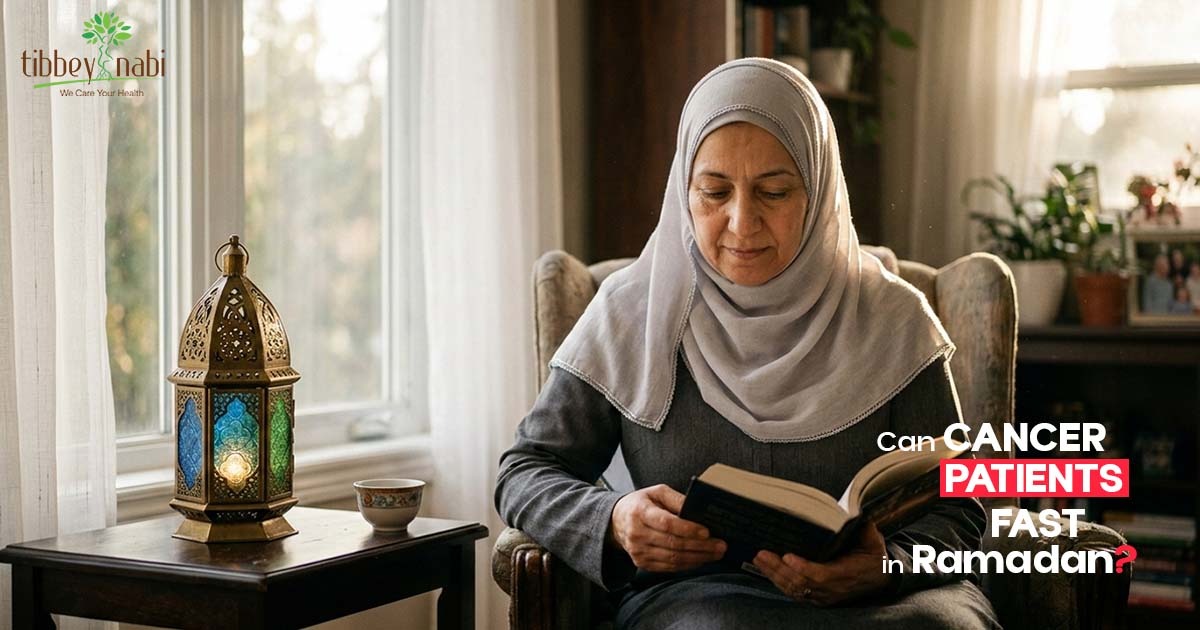
Ramadan is a month of faith, family and routine. For someone living with cancer, the question “Can I fast?” can carry a lot of weight. Many patients want to take part. Many families worry. Both feelings are natural.
The honest answer is that it depends. Some people with cancer can fast safely with their oncologist’s approval. Others are advised not to, because fasting could affect their treatment or their health. Islam recognises this: the sick are given a concession, and choosing health is not a failing of faith.
This guide explains who may be able to fast, who usually should not, how newer treatments such as targeted therapy and immunotherapy change the picture, how to plan medicines and fluids, what warning signs to watch for, and how families can help. It is general information. Your own oncologist’s advice always comes first.
Can You Fast During Cancer Treatment? The Short Answer
- Some patients can fast with medical clearance. This often includes people on certain hormonal or targeted therapies, people on non-treatment days between chemotherapy cycles who feel well, and people in the early or milder stages of radiotherapy.
- Many patients are advised not to fast. This usually includes people receiving intravenous (IV) chemotherapy, people in intensive radiotherapy, and people recovering from major surgery.
- Newer treatments need their own check. Infusion days for immunotherapy are generally treated like IV chemotherapy days, while some tablets can be moved to iftar and suhoor.
- The decision is personal and medical. It depends on the cancer type and stage, the treatment, nutrition, hydration, and other conditions such as diabetes, kidney or heart disease.
- Talk to your health professional well before Ramadan, not during the first week.
Ramadan Fasting by Cancer Treatment Type: Quick Reference Table
This table reflects general guidance from UAE oncology experts and cancer-care centres. It is not personal advice.
| Situation | Generally |
|---|---|
| IV chemotherapy (treatment days) | Usually not advised |
| Days between chemotherapy cycles, when you feel well | May be possible with clearance |
| Immunotherapy or monoclonal antibody infusion days | Usually not advised on the infusion day, because it is given into a vein. Between infusions, some patients who feel well may be able to fast with clearance. |
| Targeted therapy tablets or capsules | May be possible with clearance, but the dose must fit a fed or empty-stomach schedule |
| Hormonal therapy (tablets or injections) | Often possible with clearance |
| Short or early-stage radiotherapy | May be possible |
| Intensive or later-stage radiotherapy | Usually not advised |
| Recovering from major surgery | Usually not advised |
| Advanced cancer, weight loss or malnutrition, serious infection, kidney problems | Usually best to postpone |
Risks of Fasting During Chemotherapy and Cancer Treatment

Fasting means no food, water or medicine from dawn to sunset. Cancer treatment can already cause nausea, fatigue and appetite loss, so a long day without food or fluid can add strain. The main concerns doctors raise are:
- Dehydration and electrolyte imbalance. This matters more in the UAE heat, and some treatments depend on good hydration.
- Malnutrition and weight loss. Many patients struggle to eat enough during treatment.
- Medicine timing. Doses need to stay evenly spaced and sometimes need to be taken with food.
- Fatigue and lowered resistance. Weakness can build up over the weeks of Ramadan.
Which Cancer Patients May Be Able to Fast in Ramadan?
A UAE oncologist quoted by Gulf News describes these patients as possible candidates:
- people on hormonal or biological treatments given by injection under the skin or into a muscle
- people having short-course radiotherapy, or in the first days or weeks of a long course
- people who feel well after chemotherapy side effects such as nausea have eased
Even then, the clearance must come from your treating team, and it can change if your condition changes.
Who Should Not Fast in Ramadan with Cancer?
You are generally advised not to fast if you are:
- receiving IV chemotherapy
- in the later weeks of intensive radiotherapy
- recovering from major cancer surgery
- losing weight, malnourished or very weak
- dealing with a serious infection or kidney problems
- on any treatment where your doctor says fasting is unsafe
Fasting is also best postponed in advanced cancer or in the early cycles of intensive chemotherapy.
Do Injections, IV Drips, Chemotherapy and Tablets Break the Fast?
Medical and religious views can differ, so please check with your imam or a qualified scholar for your own case. As a general guide:
- Tablets and oral medicines break the fast.
- Injections, painkillers and most antibiotics are generally not considered to break the fast.
- Drips and IV treatments may or may not, depending on what they contain and why they are given. Nutritional fluids do.
- IV chemotherapy is considered by the UAE oncologist quoted above to break the fast, which is one reason these patients are usually advised not to fast.
Fasting with Immunotherapy, Targeted Therapy and Modern Cancer Treatments
Cancer treatment has changed a great deal. Many patients now receive newer treatments that work differently from traditional chemotherapy. This is helpful for planning, because the way a treatment is given often decides whether fasting is practical. Your oncologist will tell you which applies to you.
Can You Fast on Targeted Therapy Tablets?
Targeted drugs act on specific features of cancer cells. According to the National Cancer Institute (NCI), some are small-molecule drugs taken by mouth as pills or capsules, and others are monoclonal antibodies given into a vein. Common side effects include diarrhoea, skin problems and liver problems.
- For fasting: tablets can often be moved to iftar and suhoor. Some must be taken with food and others on an empty stomach, so the exact schedule matters. Diarrhoea can cause dehydration quickly, which is a reason to review your plan first.
Can You Fast on Immunotherapy Infusion Days?
Immunotherapy, such as checkpoint inhibitors, helps the immune system recognise cancer. It is usually given as an infusion at the hospital on scheduled days, with time between treatments. Ask your team whether any part of your treatment is given as an injection under the skin. The NCI lists rash, diarrhoea and fatigue among the common side effects, and rarer inflammation of organs such as the liver, thyroid or lungs.
- For fasting: infusion days are generally treated like IV chemotherapy days. Between infusions, fasting is a decision for you and your oncologist. If you develop diarrhoea, stomach pain or a new rash, tell your team early, because these can need prompt treatment and are not something to push through while fasting.
Fasting with Hormonal Therapy for Breast or Prostate Cancer
Many hormonal treatments are daily tablets or regular injections. UAE oncology guidance describes hormonal and similar treatments given by injection as generally compatible with fasting, with medical clearance.
- For fasting: ask whether the tablet timing is flexible, and keep it at the same time each day.
Fasting During Radiotherapy: Short vs Long Courses
Modern radiotherapy can be more targeted, and for some cancers courses are shorter.
- For fasting: UAE oncology experts say short courses, or the early part of a longer course, may be compatible with fasting, while the later weeks of intensive radiotherapy often are not.
Fasting When You Have Combined Treatments
Many patients now receive a combination, for example chemotherapy with immunotherapy or a targeted drug. Combinations can make the schedule and the side effects more complex, so the fasting decision should be made for the whole regimen, not for one drug.
Questions to Ask Your Oncologist Before Ramadan
- Is my medicine taken with food, on an empty stomach, or at a set gap from meals?
- Can it be taken at iftar and suhoor, even though the gaps will be uneven (about 9 to 10 hours overnight and longer by day)?
- What should I do if I miss or delay a dose?
- Which side effects (diarrhoea, vomiting, mouth sores) should make me break the fast and call you?
- Can my infusion or appointment day be planned around Ramadan?
- Can I see a dietitian and an oncology pharmacist before Ramadan?
How to Time Cancer Medicines During Ramadan: Iftar and Suhoor Schedule
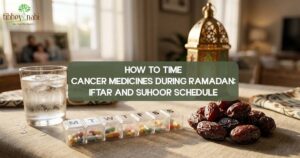
Never change your medicine timing on your own. Instead, ask your oncologist or oncology pharmacist for a Ramadan plan. Common approaches include:
- Move tablets to iftar and suhoor. Twice-daily medicines can often be taken at iftar and suhoor. UAE oncology guidance suggests keeping about 9 to 10 hours between doses. If the gap would be shorter, ask your doctor first.
- Keep to the instructions about food. If a tablet must be taken with a meal, tell your team so they can choose the right meal.
- Ask about alternatives. Some anti-nausea medicines come as a patch that lasts about a week, which can replace daily tablets while fasting.
- Ask about frequency. If you take medicine three or more times a day, your doctor may be able to adjust the schedule.
- Write it down. Keep one simple Ramadan medicine chart and share it with your family.
How Much Water Should Cancer Patients Drink Between Iftar and Suhoor?
UAE oncology experts suggest roughly 1.5 to 2 litres of fluid between iftar and suhoor, if your condition allows. A few ways to make this easier:
- Sip steadily through the evening rather than drinking large amounts at once.
- Count soups, milk-based drinks, diluted juices and water-rich fruits (watermelon, cucumber) towards your total.
- Go easy on tea, coffee and salty foods, which can increase thirst.
- If you have heart or kidney conditions, ask your doctor for your personal fluid target before following any general number.
Ramadan Diet for Cancer Patients: What to Eat at Suhoor and Iftar
Do not skip suhoor. It gives you energy for the day. Aim for balanced meals with protein, whole grains, vegetables and healthy fats.
At Iftar
- Break the fast gently with dates, water or a light soup.
- Rest a little, then have a fuller meal.
- Choose protein-rich foods such as fish, chicken, eggs, lentils and yoghurt.
At Suhoor
- Choose slow-release foods: oats, whole-grain bread, eggs, labneh, nuts and fruit.
- Include fluids and protein.
Throughout the evening
- Eat small, frequent portions instead of one large meal.
- Avoid heavy, fried and very spicy food, especially if your cancer affects the digestive system.
- If appetite is poor, ask a dietitian about calorie- and protein-boosting ideas.
- Aim for 30 to 60 minutes of light activity if your doctor agrees.
Warning Signs: When Cancer Patients Should Break the Fast
Breaking the fast is permitted whenever fasting causes harm or real hardship. Break your fast and contact your care team (or go to the nearest emergency department) if you notice:
- dizziness, fainting or confusion
- severe weakness or extreme fatigue
- very dark urine, or passing very little urine
- persistent vomiting or diarrhoea
- fever or chills, especially if you are on chemotherapy
- chest pain or difficulty breathing
- a very fast heartbeat or symptoms of low blood sugar
- a new rash, or new stomach pain with diarrhoea, if you are on immunotherapy or targeted therapy
Your team may add others based on your treatment. Keep their contact numbers close.
Fasting Exemption for Illness in Islam: Qada, Fidyah and Other Ways to Take Part

The Qur’an grants a concession to those who are ill (Surah Al-Baqarah, 2:184–185). In general:
- Qada (making up fasts): If your illness is temporary, you can make up missed fasts later when you are well.
- Fidyah: If fasting is medically unsafe in the long term, fidyah (feeding a person in need for each missed day) usually replaces making up the fasts.
- Other ways to take part: nightly prayers, Qur’an recitation, remembrance (dhikr) and charity.
Feeling guilty is understandable, but being unable to fast does not reduce anyone’s standing with God. A local imam or scholar can advise on your own situation.
How Families and Caregivers Can Support a Cancer Patient During Ramadan
- Support the medical decision, whichever way it goes. Avoid pressure to fast or not to fast.
- Plan small, nourishing meals and keep fluids ready.
- Keep the medicine chart visible and help with timing.
- Watch for the warning signs above.
- Keep iftar calm and flexible. A patient may need to eat early or rest.
- Include them in the spiritual side of Ramadan: pray, read or listen to the Qur’an together.
- Look after yourselves too. Caregivers need rest and support.
Ramadan 2027 Cancer Care Checklist: What to Do Before Ramadan
Do these four to eight weeks before Ramadan (it is expected to begin around early-to-mid February 2027; check local moon-sighting announcements):
- Book an appointment with your oncologist to discuss fasting.
- Ask whether your treatment dates, cycle or doses could be adjusted.
- Get a written medicine schedule for Ramadan, including any targeted therapy tablets and supplements.
- See a dietitian for a suhoor and iftar plan.
- Tell your diabetes team if you also have diabetes.
- Speak to your imam or a qualified scholar about exemptions.
- Save emergency numbers and know where to go if unwell.
- Agree on your “stop” signs with your family in advance.
Supportive Care in Ramadan: Ayurvedic Supplements and Body Revival
What Is Supportive Care for Cancer Patients?
Supportive care helps a person through treatment. It does not cure cancer. It looks at the things that make treatment harder to live with: strength, appetite, nutrition, recovery and everyday quality of life. Good supportive care includes a healthcare team, a dietitian, emotional and spiritual support, and in some cases a supplement taken with your team’s knowledge.
What Is Body Revival?
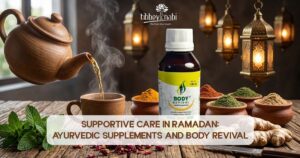
Body Revival is an Ayurvedic formulation developed with a focus on supportive cancer care. It is intended to support patients as part of their overall cancer-care journey, and can be considered alongside the medical treatment recommended by healthcare professionals.
Body Revival is a health supplement based on herbal formulation. It is not chemotherapy, immunotherapy or any other cancer treatment, and it does not replace them.
Body Revival Clinical Trial in Breast Cancer Patients: What It Reported
Body Revival has been studied in a clinical trial involving breast cancer patients, registered with the Clinical Trials Registry of India (CTRI-ICMR) under CTRI/2023/11/059465. The trial looked at quality of life, performance status, chemotherapy- and radiation-related side effects, appetite, stamina, nausea, constipation, muscle weakness, dizziness, fatigue, liver enzymes, blood protein and haemoglobin. The reported findings included:
- better physical and psychological well-being
- improved daily functioning and energy
- fewer treatment-related side effects
- increased appetite, stamina and endurance
- lower liver enzyme levels and improved blood protein and haemoglobin counts
These results come from one trial in a specific group of breast cancer patients in India. They do not show that Body Revival treats or cures cancer. It is a supportive care health supplement, individual results vary.
How to Use Any Supplement Safely During Ramadan with Cancer
Ramadan changes eating and medicine times, so a supplement needs the same planning as any tablet.
- Tell your oncologist and pharmacist before Ramadan. Show them the label and the ingredient list.
- Ask about timing. Your team can tell you whether it is best taken at iftar, at suhoor, or at a different time from your other medicines, based on the product directions.
- Don’t start something new in the middle of the month without checking. If a side effect appears, it becomes hard to tell what caused it.
- Keep it on your medicine chart along with your treatment tablets, so family members know the full schedule.
- Do not use a supplement as a reason to stop, skip or delay treatment, or as the basis for deciding whether to fast. Your oncologist decides that.
- Report new symptoms such as nausea, rash, diarrhoea or unusual tiredness to your team early.
A Simple Ramadan Routine for Cancer Patients
- a gentle, protein-rich diet and steady fluids between iftar and suhoor
- rest and light activity, as approved by your doctor
- time for prayer, Qur’an and family
- a supplement only as agreed with your care team
- regular check-ins with your oncologist
Final Takeaway: Fasting in Ramadan with Cancer
There is no single answer to “Can cancer patients fast in Ramadan?” Some can, with careful medical planning. Many are advised not to, and newer treatments such as immunotherapy supportive treatment and targeted therapy need a drug-by-drug decision. Both choices are valid, and neither reflects a lack of faith. Speak to your oncologist early, build a medicine and fluid plan, know your warning signs and lean on your family and your community.
Ramadan and Cancer: Frequently Asked Questions
Can I fast during chemotherapy in Ramadan?
It depends. People having IV chemotherapy are usually advised not to fast. Some patients on non-treatment days, or on certain tablets, may fast with their oncologist’s approval. Speak to your team before Ramadan begins.
How do I time my cancer medicines in Ramadan?
Ask your oncologist or pharmacist for a written plan. Twice-daily tablets are often moved to iftar and suhoor, usually with about 9 to 10 hours between doses. Don’t change timing on your own.
How much should I drink between iftar and suhoor?
About 1.5 to 2 litres is often suggested, sipped steadily through the evening. If you have heart or kidney problems, ask your doctor for your personal limit.
Who should not fast in Ramadan with cancer?
Generally, people on IV chemotherapy, in later intensive radiotherapy, recovering from major surgery, or with weight loss, severe weakness, serious infection or kidney problems. Your doctor decides for your case.
Does an injection or IV drip break the fast?
Injections are generally not considered to break the fast. Drips depend on what they contain, and nutritional fluids do break it. A UAE oncologist quoted by Gulf News considers IV chemotherapy to break it. Check with a scholar for your situation.
Can I fast during radiotherapy?
Possibly in short courses or the early weeks. In later weeks of intensive radiotherapy, fatigue and dryness often worsen, so fasting is usually not advised. Ask your radiation team.
What should I do if I feel dizzy or unwell while fasting?
Break your fast, rest and drink fluids. Contact your care team, and seek emergency care for fainting, confusion, chest pain, breathing difficulty or fever. Islam permits breaking the fast to prevent harm.
What if my medicine must be taken three times a day?
Ask your doctor whether it can be changed to a once- or twice-daily option, or taken in the evening and night window. Never skip or squeeze doses without advice.
Is fasting good for cancer? Is intermittent fasting a cancer treatment?
Nothing in the guidance reviewed for this article shows that fasting treats or cures cancer. Please don’t fast, or change your diet, to treat cancer. Ramadan fasting is a religious practice, and the safety question comes first.
Will fasting make my cancer treatment less effective?
Doctors’ main concerns are dehydration, poor nutrition and mistimed medicines, not the fast itself. Your team can tell you whether fasting is safe with your regimen.
Is it a sin if a cancer patient cannot fast?
No. The Qur’an grants a concession to the sick. Missing fasts for health reasons does not reduce your spiritual standing. Ask your imam or a qualified scholar if you want guidance on your own situation.
What are qada and fidyah for sick people?
Qada means making up missed fasts after you recover. Fidyah means feeding a person in need for each missed day when long-term illness makes fasting unsafe. A scholar can advise which applies.
What should cancer patients eat at suhoor and iftar?
Break your fast with dates, water or soup, then eat a balanced meal. At suhoor, choose protein and slow-release foods such as oats, eggs, nuts and whole grains. Eat small portions and avoid heavy, fried or very spicy food.
Can I fast with cancer and diabetes?
Tell your diabetes team before Ramadan. Fasting with cancer treatment and diabetes needs a joint plan, because blood sugar, medicines and meals all need careful timing.
Can I take supplements or herbal medicines in Ramadan during cancer treatment?
Tell your oncologist and pharmacist before Ramadan. Supplements, vitamins and herbal products can interact with treatment, and some need to be taken with food. Check the ingredients against your own requirements, such as alcohol-free, halal and vegetarian, and add the supplement to your medicine chart.
What if I fast against my doctor’s advice?
Some patients choose to. If you do, tell your care team so they can plan safe monitoring, agree your “stop” signs in advance, and break your fast if you become unwell.
How can my family help me during Ramadan?
By supporting the medical decision, keeping a medicine chart, preparing small nourishing meals, watching for warning signs and sharing prayer and Qur’an time. Caregivers also need rest and support.
When should I talk to my oncologist about Ramadan?
Four to eight weeks before it begins, so there is time to adjust schedules, see a dietitian and arrange blood tests if needed.
Can I fast on immunotherapy or targeted therapy?
Not automatically. Infusion days are generally treated like IV chemotherapy days. Targeted tablets can sometimes be moved to iftar and suhoor, and some patients may fast between treatments. Your oncologist decides after looking at your whole regimen.
What do I do if my targeted therapy tablet must be taken on an empty stomach?
Do not guess. Some tablets are taken with food and others on an empty stomach, so ask your oncologist or oncology pharmacist for a Ramadan schedule that keeps the right gap from meals.
Can diarrhoea or vomiting from cancer treatment affect fasting?
Yes. Both can quickly cause dehydration. Break your fast, drink fluids and contact your care team. With immunotherapy, new diarrhoea or stomach pain needs prompt advice and should not be pushed through.
Can I take Body Revival during Ramadan?
Body Revival is a supportive-care herbal supplement intended to be used alongside medical treatment. Tell your oncologist and pharmacist, share the label, and ask them how to time it around iftar, suhoor and your other medicines.
Is Body Revival a treatment for cancer?
No. It is a supportive-care supplement. It does not replace chemotherapy, immunotherapy, radiotherapy, surgery or any other prescribed treatment.
What does the Body Revival clinical trial show?
A CTRI-registered trial in breast cancer patients (CTRI/2023/11/059465) reported improvements in quality of life, energy, appetite, stamina and some blood markers, with fewer treatment-related side effects. It was a specific group in India, and results may differ for others. It is not a cure claim.
References
- Gulf News: Ramadan 2025: UAE Oncology Society sets guidelines for cancer patients fasting during Ramadan
- Gulf News: Can cancer patients fast in Ramadan? UAE expert explains
- Macmillan Cancer Support: Navigating fasting during Ramadan for cancer patients
- Kings Cancer Care Centre: Can cancer patients fast Ramadan?
- Universitas Gadjah Mada: Oncologist explains how cancer patients can fast safely during Ramadan
- Muslim Hands USA: Can I fast if I’m sick? Ramadan exceptions and fidyah
- National Cancer Institute: Targeted Therapy to Treat Cancer
- National Cancer Institute: Immune Checkpoint Inhibitors
- Body Revival: Clinical trial page
- Tibbey Nabi: About us
Disclaimer: This article is for educational and informational purposes only. It is not a substitute for diagnosis, medical advice or treatment from a qualified healthcare professional. Do not start, stop, delay or change any cancer treatment or medicine without advice from your treating oncology team. Body Revival is a supportive-care supplement and is not a treatment or cure for cancer. For religious rulings, please consult a qualified scholar.