| QUICK ANSWER
In the UAE and Gulf, most people can keep eating familiar halal foods during chemotherapy: eggs, chicken, fish, labneh, lentils, hummus and soft grains, in small, well-cooked, frequent meals. Aim for enough protein and fluids, and adjust your food week by week through each cycle. Do not fast during treatment without doctor’s advice. |
At a Glance
- Protein first: many patients aim for about 1.0 to 1.5 g of protein per kg of body weight a day (one hospital guide). Ask your dietitian for your own number.
- Halal protein options: chicken, lamb, beef, fish, eggs, labneh, yoghurt, lentils, chickpeas, foul and tofu, cooked through.
- Week by week: bland and small around infusion day, protein in small portions in days 4 to 7, strict food safety when counts are low, and build back in the recovery week.
- Taste changes: cold foods, lemon, mint, plastic cutlery and smaller portions help.
- Fasting: the Emirates Oncology Society says the treating doctor decides, and patients on IV chemotherapy are exempt in Ramadan (Gulf News). Fasting to “boost” chemo is not recommended outside a clinical trial.
- Gulf food safety: avoid raw camel milk and undercooked meat.
What Is a Good Diet for a Cancer Patient in the UAE?
A good diet during treatment gives enough protein and calories to keep your strength up, enough fluid, and food that is safe to eat when your immune system is weaker. Familiar Gulf and South Asian foods can all fit, as long as they are fresh, well cooked and eaten in small portions.
Chemotherapy and radiation can cause nausea, mouth sores, taste changes, constipation, diarrhoea and fatigue, which make eating harder (see also the NCI page on appetite loss). Eating too little can lead to weight loss and weakness. Mediclinic in Abu Dhabi advises seeking help if you lose 5% or more of your weight without trying, and suggests about 8 to 12 cups of fluid a day unless your team restricts it. Aster Hospitals in Dubai suggests five to six small meals a day.
One Indian hospital guide suggests 1.0 to 1.5 g of protein per kg of body weight a day for many patients. For a 60 kg person that is about 60 to 90 g a day.
What Can I Eat Each Week of Chemotherapy?
Chemo usually runs in cycles of two to four weeks, and appetite follows a pattern within each cycle. The table below is a general guide. Your own cycle may differ, and doctor can tell you when your counts are lowest.
| Phase | What to eat | Gulf and UAE examples |
| Days 1 to 3 (infusion and just after) | Small, bland meals. Clear fluids. Cold or room-temperature food if smells bother you. | Plain rice, toast with labneh, strained lentil soup, chilled pasteurised laban or yoghurt, banana, firmly set egg, chicken broth |
| Days 4 to 7 (nausea, fatigue, taste changes) | Protein in small portions. Lemon or ginger if you tolerate them. | Egg, yoghurt, soft hummus on bread, harees or madrouba (soft wheat or rice porridge with chicken), mashed mild foul, khichdi |
| Week 2 (counts often at their lowest in many regimens) | Strict food safety. Cook everything through. Choose cooked over raw. | Well-cooked mild chicken machboos, steamed fish, cooked vegetable soups, rice, pasteurised dairy |
| Week 3 (recovery) | Build back: more calories and protein, cooked or peeled fruit and vegetables, whole grains if tolerated. | Lamb or chicken stew with rice, fish with rice, whole-wheat bread, muhallabia or rice pudding made with pasteurised milk |
If you are on radiation, side effects build gradually and depend on the area treated. Weeks 1 to 2 are for building reserves. In weeks 3 to 6, choose soft, moist, mild foods such as porridge, soups, mashed vegetables and milk puddings, and avoid very hot, spicy or crunchy foods if your mouth or throat is sore (see MSK’s diet guide for head and neck treatment). Tell your team early if you cannot eat or drink enough.
A 7-Day Halal Meal Chart for the UAE and Gulf
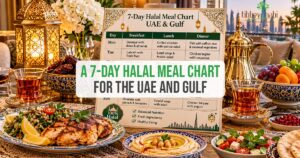
This is a sample, not a prescription. Swap items for what you tolerate and can get. Eat small portions every 2 to 3 hours, and keep food freshly cooked.
| Day | Breakfast | Lunch | Snack | Dinner |
| Mon | Labneh with soft bread and a firmly cooked egg | Chicken and rice (mild), cooked carrots | Banana and pasteurised milk | Lentil soup with soft bread |
| Tue | Mashed foul with olive oil, toast | Steamed fish, rice, zucchini | Yoghurt with chopped banana | Madrouba (chicken porridge) |
| Wed | Vegetable omelette (fully set), bread | Harees with a little ghee | Hummus with soft bread | Dal with soft roti |
| Thu | Oat porridge with milk and dates | Lamb stew, rice, cooked vegetables | Milkshake (banana, milk) | Chicken soup with vermicelli |
| Fri | Khichdi with curd | Mild, well-cooked chicken machboos | Rice pudding | Fish curry or baked fish with rice |
| Sat | Idli or dosa with sambar | Chickpea and vegetable stew with rice | Pasteurised laban | Fully set egg and vegetable shakshuka, bread |
| Sun | Mashed foul and labneh | Rest day: soup, rice and soft chicken | Fruit, peeled or cooked | Lentil soup, plain rice |
Fluids: sip through the day. Water, clear soups, diluted juice and pasteurised laban all count. If you have kidney or heart problems, check coconut water and electrolyte drinks with your team.
Which Halal Protein Options Are Best During Chemo?
Chicken, lamb, beef, fish, eggs, dairy, lentils, chickpeas and tofu all count, as long as they are fully cooked and halal. Eat some protein at every meal and snack, in small portions.
| Protein | Examples | Tips |
| Halal poultry | Chicken breast or thigh, soups, madrouba | Cook until no pink remains. Soup and stew are often easier than dry grilled meat. |
| Halal red meat | Lamb or beef stews, minced meat in soft dishes | Cook through and cut small. If meat tastes odd, use eggs or lentils for a few days. |
| Fish | Steamed or baked fish, fish curry | Avoid raw or undercooked fish. |
| Eggs | Boiled, omelette, shakshuka | Cook until yolk and white are firm. Avoid runny eggs and raw-egg dressings. |
| Dairy | Labneh, yoghurt, laban, pasteurised cheese, milk puddings | Choose pasteurised only. Avoid raw milk, including raw camel milk. |
| Plant protein | Lentils, chickpeas, foul, hummus, tofu | Cook soft. Thin lentil soup if you get bloating. |
Buy from halal-certified sources in the UAE. If you use oral nutrition drinks or supplements, check the label for halal status.
How Do I Handle Taste Changes During Chemo?
Taste changes are common. Chemotherapy can cause a metallic or bitter taste, and radiation to the head and neck can dull taste. Cold food, lemon, herbs and plastic cutlery help, and so does switching protein sources.
- Metallic taste: use plastic cutlery (suggested by Mediclinic), try cold foods, suck on lemon wedges, and rinse your mouth before eating.
- Food tastes bland: add flavour with lemon, mint, parsley, coriander, cumin, cardamom or a little sumac, in mild amounts.
- Too sweet or too salty: dilute, or balance with lemon or a pinch of salt.
- Meat tastes odd: swap in eggs, labneh, lentils, hummus or chicken soup.
- Smells trigger nausea: eat cold or room-temperature food, ventilate the kitchen (bakhoor and strong frying smells can make it worse), and ask someone else to cook.
- No appetite: treat food like medicine on a schedule. Set an alarm every 2 to 3 hours for a few bites or sips.
- Zinc:one UAE hospital guide says zinc may help some people with taste. Ask your doctor before taking it.
Can I Fast During Chemotherapy or Ramadan?

Ask doctor first. The Emirates Oncology Society says the treating doctor decides whether fasting is safe, and patients should not fast if it could cause harm. Fasting to improve chemo is not recommended outside clinical trials.
Ramadan. According to Gulf News (March 2025), quoting Professor Humaid Al-Shamsi, president of the Emirates Oncology Society (see also Gulf News, 2023):
| Situation | Guidance reported |
| IV chemotherapy | Patients are exempt because IV fluids break the fast. They may fast on non-treatment days if their doctor agrees. |
| Injected targeted or hormonal treatment (under the skin or into muscle) | Does not break the fast. |
| Oral targeted drugs | May be possible if doses move to after Iftar. Check with your doctor. Twice-daily tablets need about 9 to 10 hours between doses. |
| Radiotherapy | A short course usually allows fasting. A long, intensive course may be fine early, but fasting may become inadvisable. |
| After major cancer surgery | Fasting is strongly not recommended. |
Macmillan Cancer Support adds that fasting is not required if it causes harm, and that skipping Suhoor is not advised. Ask doctor, and your imam or religious scholar if you want a ruling.
If you are cleared to fast:
- Hydration: 1.5 to 2 litres between Iftar and Suhoor (Emirates Oncology Society).
- Food: protein, vegetables and fish, and less sugar and refined carbohydrate. Patients need more protein, not less.
- Suhoor: do not skip it. Eggs, labneh, foul, whole-grain bread, fruit and fluids.
- Iftar: break with water, a date or two if you have no sugar restriction, then soup, then a protein meal. Avoid a heavy, fried or spicy first meal.
- Activity: light activity of 30 to 60 minutes a day if your doctor agrees.
Outside Ramadan. A 2019 review of short-term fasting during chemotherapy found preliminary data that it is safe but challenging, and said clinical research is “in its infancy”. A 2016 review of Ramadan fasting and cancer found no standard guidelines. Do not start fasting, “detox” or extreme diets on your own, because they can cause weight loss and weakness.
Is My Food Safe? Food Safety at Home in the UAE
When your white cell count is low, infections from food can be serious. Safe food handling matters more than a strict “neutropenic diet”: a 2019 review of six studies found no evidence that a neutropenic diet reduces infections, and UNC Lineberger says its benefit has never been scientifically proven. Ask your team what it advises.
- Cook through: poultry to about 74°C, minced meat to about 71°C, whole cuts to about 63°C, using a food thermometer (per American Cancer Society guidance).
- Eggs: cook until the yolk and white are firm.
- No raw camel milk. The WHO says people who are immunocompromised, or who have diabetes, kidney failure or chronic lung disease, should not drink raw camel milk, and that camel milk and meat are safe once heat treated. Choose pasteurised camel milk only. MD Anderson advises cancer patients to avoid raw milk and dairy made from it, because of Brucella, Salmonella and Listeria.
- Mandi, shawarma and buffets: choose freshly cooked, piping-hot food. Mediclinic advises caution with buffet and street food. Iftar buffets and food sitting out are a higher risk when counts are low.
- Fruit and vegetables: wash and peel fruit. Cooked vegetables are safer than raw salad when counts are low.
- Leftovers: refrigerate quickly, eat within a day, reheat until steaming hot.
- Other foods to avoid when counts are low: raw nuts and honey (check with your team), raw sprouts, raw fish, and unpasteurised juice.
Are Dates, Sweets and Sugar Allowed?
In moderation, for most people, but ask your dietitian if you have diabetes. Dates and Gulf sweets are energy-dense and can help when appetite is low. Cutting out sugar does not starve cancer: the Emirates Oncology Society calls that belief a myth (Gulf News). See our guide Sugar myth.
Foods to Limit or Avoid
- Raw or undercooked meat, fish and eggs
- Raw camel milk and other unpasteurised dairy
- Street food and buffets when your counts are low
- Very spicy, oily or fried food if it worsens nausea, acidity or mouth sores
- Alcohol and tobacco, including shisha
- Fad diets, extreme fasting and “detox” programmes
- Herbs, kadhas and supplements that a health professional has not reviewed. Our guide to herbal supplements during chemotherapy explains what to ask.
How Does Body Revival Fit In?

Body Revival fits as supportive care on top of a good diet, not instead of meals. Your food, fluids, protein and food safety come first. Body Revival is an Ayurvedic herbal health supplement that some patients and families in the UAE add to their routine, with their doctor’s knowledge.
What Is Body Revival?
Body Revival is an Ayurvedic herbal health supplement developed for people who want supportive care during their cancer journey. It is a brand of Health Reactive, distributed in the UAE by Tibbey Nabi. According to Tibbey Nabi’s website, it combines six plant-based ingredients: Madhu (honey), Kukarundha (Blumea lacera), Kharabuja (Cucumis melo), Lasuna (garlic, Allium sativum), Bilva (Aegle marmelos) and Haritaki (Terminalia chebula).
How Does It Work in Practice?
Body Revival is meant to sit alongside your meals, rest and medical treatment. It is not a meal replacement, so keep up your protein, fluids and the plan above.
Where It Fits Through the Week
| Phase | Diet focus |
| Days 1 to 3 | Small, bland meals, fluids |
| Days 4 to 7 | Protein in small portions |
| Week 2 | Strict food safety |
| Week 3 | Building back |
| Ramadan | Suhoor and Iftar meals as in this guide |
What the Research Says So Far
Body Revival is the subject of a breast cancer study registered with the Clinical Trials Registry of India (CTRI/2023/11/059465), summarised on Body Revival’s website. The summary reports observations on quality of life, performance status and treatment-related side effects. It was one study in a specific group of patients in India, and individual results vary.
Starting safely in the UAE
- Tell your doctor first and show them the ingredient list and label.
- Mention allergies and medicines, including blood thinners, diabetes medicine and other herbal products. The formulation includes honey and garlic, so tell your dietitian if you have diabetes or a sugar restriction.
- Follow the label and keep up all prescribed treatment and check-ups.
- Report any new symptom to your doctor.
- Keep meals, fluids and rest steady.
When Should I Call My Doctor About Eating Problems?
Call your healthcare team promptly if you cannot keep down fluids for 24 hours, vomiting does not stop, you have severe diarrhoea or no bowel movement for several days with pain, you have a fever, chills or signs of infection, you are losing weight quickly, mouth sores stop you eating, or you feel dizzy or notice dark urine.
Go to emergency care for severe pain, trouble breathing, confusion or fainting. In the UAE, call 998 for an ambulance. See our guide to caring for a cancer patient at home for a full checklist.
How Can Families Help?
- Prepare small, fresh portions instead of large plates.
- Cook what the patient asks for, even at odd times.
- Ventilate the kitchen and avoid strong cooking smells near the patient.
- Offer food gently, without pressure or guilt.
- Keep a simple log of meals, vomiting, bowel movements and weight to show the doctor.
- Do not push herbs, kadhas or “cancer-fighting foods” from family or social media without checking with the doctor.
About Tibbey Nabi
Tibbey Nabi General Trading LLC is a Dubai-based company, established in 2008, and the UAE distributor of Body Revival (about Tibbey Nabi). The team can help with questions about Body Revival and its ingredients, ordering and delivery in the UAE, and information to take to your doctor. For medical advice, speak to your doctor.
- Address: Tamani Arts Offices, Office 0716, Business Bay, opposite DoubleTree Hotel, Dubai.
- Email: consult@tibbeynabi.com
- Phone / WhatsApp: +971 58 537 5313 (on the website) or +971 58 537 6313
Key takeaways
- Most people can keep eating familiar halal foods during chemo, in small, well-cooked, frequent meals with protein at every meal.
- Match your food to the week of your cycle: bland and small at infusion, protein in days 4 to 7, strict food safety when counts are low, then build back.
- Taste changes are common and manageable: cold foods, lemon, herbs and plastic cutlery help.
- Ask a health professional before fasting. IV chemotherapy patients are exempt in Ramadan, and fasting to boost chemo is not recommended outside a trial.
- Avoid raw camel milk and undercooked meat, and take care with buffets and street food.
- Body Revival fits as supportive care on top of a good diet, with doctor’s knowledge.
How This Guide Was Prepared
This guide was written by the Tibbey Nabi editorial team from the sources listed under References, including UAE hospital nutrition guides (Mediclinic, Aster, Emirates Hospitals), the Emirates Oncology Society (via Gulf News), Macmillan, the WHO, MD Anderson, the American Cancer Society and published reviews. It will be updated when those sources change.
Frequently Asked Questions
1. What can I eat each week of chemo?
Go bland and small on infusion days (days 1 to 3), add protein in small portions in days 4 to 7, follow strict food safety in the week your counts are lowest (often week 2), then build calories and protein back in the recovery week. See the week-by-week table above.
2. What is the best halal protein during chemotherapy?
Fully cooked halal chicken, lamb, beef and fish, plus eggs, labneh, yoghurt, lentils, chickpeas, foul, hummus and tofu. Eat some at every meal and snack in small portions. Choose pasteurised dairy.
3. How much protein do I need during chemo?
Many patients aim for about 1.0 to 1.5 g of protein per kg of body weight a day, according to one Indian hospital guide. Your dietitian can give you a number that fits your kidney function, cancer type and treatment.
4. How do I handle taste changes during chemo?
Use plastic cutlery, cold foods and lemon for a metallic taste, add mild herbs and spices for blandness, swap meat for eggs, labneh or lentils if it tastes odd, and eat cold food if smells bother you. Ask your doctor before taking zinc.
5. Can I fast during chemotherapy?
Not without doctor’s advice. No guidance recommends fasting around chemotherapy outside a clinical trial, and a 2019 review says the evidence is still preliminary. Fasting can cause weight loss and weakness.
6. Can cancer patients fast in Ramadan?
The treating doctor decides. The Emirates Oncology Society says patients on IV chemotherapy are exempt because IV fluids break the fast, and may fast on non-treatment days if their doctor agrees. Fasting is not required if it causes harm. Ask a healthcare professional and, if you wish, a religious scholar.
7. What should I eat at Suhoor and Iftar during treatment?
Do not skip Suhoor: eat eggs, labneh, foul, whole-grain bread, fruit and fluids. Break your fast with water, a date or two (if you have no sugar restriction), then soup and a protein meal. Aim for 1.5 to 2 litres of fluid between Iftar and Suhoor.
8. Is raw camel milk safe during cancer treatment?
No. The WHO advises people who are immunocompromised not to drink raw camel milk, and MD Anderson advises cancer patients to avoid raw milk products. Pasteurised camel milk is safe.
9. Do I need a neutropenic diet?
Usually not a strict one. A 2019 review found no evidence it reduces infections. Safe food handling matters more. Ask your team what it advises for your regimen.
10. Can I eat shawarma, mandi or buffet food?
When counts are low, choose freshly cooked, piping-hot food and avoid food that has been sitting out. Mediclinic advises caution with buffet and street food.
11. Are dates and sweets allowed?
In moderation, for most people. They are energy-dense and can help when appetite is low. If you have diabetes, ask your dietitian about portions.
12. Should I cut out sugar to starve the cancer?
No. The Emirates Oncology Society calls this a myth. Patients need enough protein and calories. See
13. What if I cannot eat enough?
Eat small portions every 2 to 3 hours, use liquid calories (soups, milkshakes, laban), and tell your healthcare team early. Seek help if you lose 5% or more of your weight without trying.
14. What is the role of Body Revival in my diet plan?
Body Revival is an Ayurvedic herbal health supplement for supportive care, taken alongside your meals and medical treatment, with doctor’s knowledge. It does not replace food or treatment.
15. Can I take Body Revival during chemotherapy or in Ramadan?
Many people take supportive supplements alongside treatment. Share the ingredient list with healthcare expert first so they can advise on timing, including around Iftar and Suhoor.
16. Who should check with their doctor before starting Body Revival?
Everyone in treatment. Mention allergies, diabetes, liver or kidney conditions and blood-thinning medicines. The formulation includes honey and garlic.
17. Where can I buy Body Revival in the UAE?
Contact Tibbey Nabi in Business Bay, Dubai: consult@tibbeynabi.com.
Disclaimer
This article is for general information only and is not medical or dietary advice. It does not replace doctor’s or dietitian’s advice, because every treatment, cancer type and blood report is different. Body Revival is an Ayurvedic supportive-care supplement intended to be used alongside, not a replacement of modern treatment.
References
- Gulf News: UAE Oncology Society sets guidelines for cancer patients fasting during Ramadan (March 2025); Can cancer patients fast in Ramadan? (2023)
- Macmillan Cancer Support: Navigating fasting during Ramadan for cancer patients (2025)
- Bragazzi et al.: Ramadan fasting and patients with cancer, Frontiers in Oncology (2016)
- de Groot et al.: Effects of short-term fasting on cancer treatment, J Exp Clin Cancer Res (2019)
- Mediclinic Middle East: Nutrition guidance for cancer treatment (2026)
- Aster Hospitals: Nutrition support during chemotherapy
- Emirates Hospitals: Chemotherapy dietary requirement (2025)
- World Health Organization: MERS-CoV transmission from animals and recommendations for at-risk groups (2018)
- MD Anderson Cancer Center: Is raw milk safe? (2025)
- UNC Lineberger: Do you really need to follow the neutropenic diet?; Sonbol et al.: Neutropenic diets to prevent cancer infections, BMJ Supportive & Palliative Care (2019)
- American Cancer Society: Food safety during cancer treatment
- National Cancer Institute: Nausea; Constipation; Appetite loss
- University of Iowa Health Care: Taste changes during cancer treatment; Memorial Sloan Kettering: Diet and nutrition during head and neck cancer treatment
- Manipal Cigna: Cancer patients diet
- Clinical Trials Registry of India: CTRI/2023/11/059465 (search the registry by this number)
- Body Revival: Clinical trial of Body Revival; Tibbey Nabi: About us