
Introduction
Stomach Cancer, also known as Gastric Cancer, is a major health concern that impacts hundreds of people worldwide in a year. Although there are advancements in medical science, due to which diagnosis and treatment of stomach cancer are better than before, still dealing with stomach cancer is a physical and psychological task for those affected.
In Dubai and the UAE, patients gain hope and improved chances of survival because of the availability of top-class medical facilities, sophisticated equipment, and a team of professionals in cancer care. In this article, we shall examine how patients with stomach cancer can be accurately diagnosed, effectively treated, and cope with the condition.
What is Stomach Cancer?
Stomach cancer results from the uncontrolled growth of abnormal cells in the stomach wall. Most stomach cancers start from the mucous-producing cells of the stomach and are referred to as adenocarcinomas, which comprise about 90 to 95% of all stomach cancers.
There are other varieties which are less common, including
Stomach cancer ranks within the top five most frequent types of cancer in the whole world. However, stomach cancer that is diagnosed in its early stages results in high success rates.
Understanding a Stomach Cancer Diagnosis
Challenges for Early Diagnosis
The main issue that could contribute to the high mortality percentage due to stomach cancer is the fact that, in most stages, the cancer does not exhibit severe symptoms, causing the patient to seek treatment late. The cancer can progress to an advanced stage before it is detected.
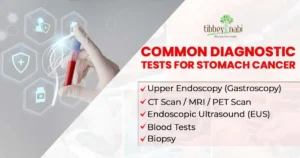
Common Diagnostic Tests
At Dubai, the medical institutions applied for diagnosis the following:
- Upper Endoscopy (Gastroscopy): To examine the lining of the stomach & take biopsies
- Biopsy: It confirms malignancy and then identifies the type of cancer cells present within the body
- CT Scan / MRI / PET Scan: Reveals cancer spread
- Endoscopic Ultrasound (EUS): Examines the depth
- Blood Tests
– To evaluate Anemia
– To evaluate liver function
– To evaluate tumor markers
Early diagnosis helps increase chances of survival as well as provide new avenues for treatment.
Stages of Stomach Cancer
There are various stages of stomach cancers, depending on how widespread the disease is:
Stage I
- Cancer limited to the stomach lining
- Often treatable with surgery
- High survival rate
Stage II
- Involvement of deeper layers of the stomach or adjacent lymph nodes
- Both Surgery and Chemotherapy Advised
Stage III
- Widespread involvement of the lymph nodes
- Aggressive treatment was required
Stage IV
- Cancer metastasizes to other organs (liver, lungs, bones)
- The topic turns to life extension and managing symptoms
Knowing the stage assists physicians in planning treatment for a patient.
Treatment available for Stomach Cancer:
Depending on the stage of the cancer, the patient’s health, and personal preferences, treatment options are offered. Contemporary developments in cancer treatment in Dubai follow a holistic approach with a patient-centered emphasis.
Surgery
In the case of stomach cancer, surgery is the key to treating the condition at the early stages of its development, which
- Partial Gastrectomy is the name given to the removal of a portion of the
- Total gastrectomy (removal of whole stomach)
Nutrition after surgery plays an important role in post-operative care.
Chemotherapy
Chemotherapy is used for killing the cancerous cells and may be administered as:
- Before surgery (neoadjuvant therapy
- After surgery (adjuvant therapy)
- For metastatic cancer to slow the advancement
Side effects can be fatigue, nausea, loss of appetite, and hair thinning.
Radiation Therapy
- Radiation may be given together with certain drugs for chemotherapy in order
- Reduce tumors Eliminate residual cancerous cells Lower recurrence rates
Targeted Therapies and Immunotherapy
Some advanced treatments are:
- Therapy targeting the HER2 protein in gastric cancer: a review
- Immunotherapy to boost body immune response
These modalities are increasingly provided in dedicated cancer facilities in Dubai.
Click to Get Free Doctor Consultation
Dealing with Stomach Cancer Emotionally and Physically
Stomach or gastric cancer affects not only one’s physiological condition but, in fact, one’s whole being. To effectively deal with this situation, one needs to be emotionally strong, make changes in his or
Coping With Emotions
- Seek counseling/psychological support
- Cancer Support Groups in Dubai
- Practice mindfulness and stress management
- Share information with family members and care providers
Nutritional Support & Lifestyle Changes
Since digestion is facilitated by the stomach, there are dietary changes that patients should make:
- Eat small, frequent meals
- Emphasize high protein, nutrient-dense foods
- Avoid spicy, acidic, and fried foods Drinking water Dietitians are also available in Dubai to assist in designing personalized diets.
Contact a doctor if you notice any of
Consult a healthcare professional if you have any of the following:
- Continuous abdominal pain
- Unintentional weight loss
- Swallowing difficulties
- Indigestion or nausea that persists
- Black or bloody stools
Early evaluation can be lifesaving.
Importance of Supportive & Integrative Care
Supportive care focuses on improving quality of life during and after treatment. This includes:
- Pain management
- Emotional support
- Nutritional therapy
- Holistic wellness approaches
Integrative care complements conventional treatment and supports long-term recovery.
Conclusion
Managing stomach cancer is not easy, but with strength, awareness, and timely medical assistance, overcoming the condition is possible. Cutting-edge technology in the diagnosis and treatment of stomach cancer, along with Dubai’s state-of-the-art healthcare facilities, offer immense hope to stomach cancer patients.
Early treatment, tailored treatment programs, and effective emotional support systems can greatly aid in this area. When a person experiences stomach cancer, they are far from alone, as resources and support exist.